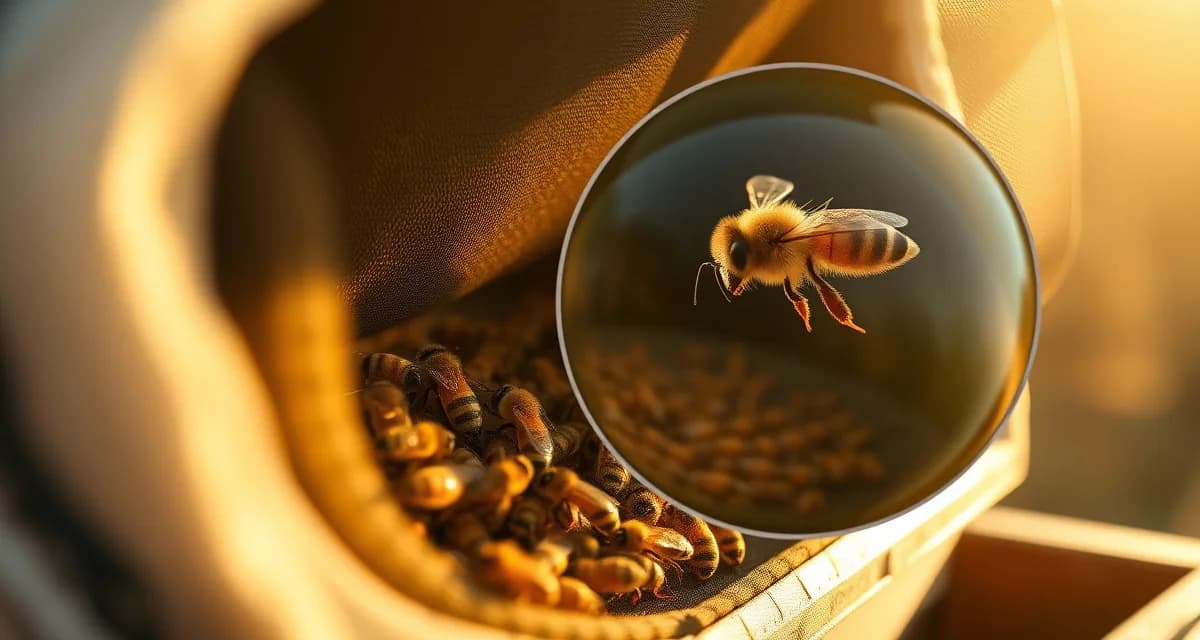
Varroa in Swarm Traps: Monitoring Caught Swarms Before Hiving
Catching a swarm in a bait hive feels like a win, and it often is. But before you move that swarm into your main apiary, you need to know what it's carrying. A swarm collected from a collapsed high-mite colony can arrive in your trap at 3-4% infestation despite appearing healthy and vigorous. The bees look fine. The mite load is not.
This is one of the most common ways that new varroa pressure enters a clean operation. The bees drifted, swarmed, or absconded from a nearby colony that was already failing. Your bait hive captured them before you had any idea where they came from. Taking the time to sample before you hive protects every colony you've already built.
TL;DR
- Natural swarms carry mites with them but typically have lower initial mite loads than the parent colony
- The swarm cluster has no capped brood for 3-5 weeks after departure, creating a natural broodless period ideal for treatment
- Parent colonies lose about 30-40% of their bee population to swarming, which can cause a temporary mite level spike
- Test parent and swarm colonies separately within 2 weeks of swarm departure
- Swarm season (April-June in most regions) coincides with rapid mite population growth in strong colonies
- Log swarm events and post-swarm mite counts in VarroaVault to track how swarming affects mite dynamics
Why Swarms Can Carry High Mite Loads
Swarms don't eliminate varroa. They do reduce it somewhat because the swarm typically carries only phoretic mites, not mites in capped brood. But if the source colony was heavily infested, the swarm can still carry a substantial phoretic load. In fact, swarms from late-season collapse events often travel with 2-5% phoretic infestation rates.
There's another factor worth understanding: swarms that have been in a trap for two to three weeks may have started raising brood. Once capped brood is present, the mite count you get from an alcohol wash reflects only the phoretic population, which understates the real situation. Your treatment decision needs to account for that.
How to Sample a Swarm Still in the Trap
Sampling a swarm in a bait box is possible, but it takes a little more care than sampling an established colony. The cluster isn't fixed on frames the way a standard colony is.
Step 1: Smoke the entrance lightly. You're not trying to drive bees up or down. Just quiet them.
Step 2: Find the cluster. Open the box and locate where the bees are densest. This is usually where the queen is and where nurse bees will be clustered.
Step 3: Scoop 300 bees from the cluster. Use a jar or a modified lid to scoop from the densest part of the cluster. Try not to scoop the queen. If you find her, move her gently aside.
Step 4: Run the alcohol wash. Add 70% isopropyl alcohol or windshield washer fluid. Shake for 60 seconds. Pour through a mesh screen over a light surface and count the mites you see.
Step 5: Calculate infestation rate. Count your bees, count your mites. Divide mites by bees, multiply by 100. That's your percentage.
What to Do Based on Your Count
If your swarm count comes back under 1%, you're in good shape. Move it into a clean hive, set it up properly, and begin your standard monitoring schedule.
If the count is 1-2%, you have a judgment call. You can hive it and treat immediately, or treat it in the trap before moving. Either way, treatment before integration with your apiary is the safer path.
If the count is above 2%, treat before hiving. An OA dribble works well here because the swarm is likely in a broodless or nearly broodless state. Apply to the cluster in the trap, wait the appropriate period, then hive the colony. Log everything from the start so you have a clean record for this colony.
Using VarroaVault to Manage Swarm Trap Captures
In VarroaVault, a swarm trap event triggers a sampling recommendation before the hive is logged as an active colony. This means you don't have to remember the workflow yourself. The software prompts you to record the catch date, enter a pre-hiving mite count, and either clear the colony or log a treatment before it enters your apiary roster.
This is exactly the kind of workflow protection that prevents the common mistake of celebrating the catch and forgetting the count. You can also link the swarm to your mite count tracking app records so the new colony enters your system with a full history from day one.
Treating Before Hiving: Is It Worth the Extra Step?
It takes maybe twenty minutes to run a count and dribble OA on a swarm cluster in a bait box. Compare that to the potential cost of introducing a high-mite swarm into an apiary you've been carefully managing all season.
The math isn't complicated. One untreated high-mite swarm integrated into your apiary becomes a reinfestation pressure point for every colony nearby. Swarms that arrive at 3% can push your established colonies through threshold within three to four weeks through mite dispersal during robbing and drifting.
Learn more about how mites move between hives in your apiary in our guide on varroa in swarms.
Building the Pre-Hiving Check Into Your Standard Practice
If you run bait hives every season, the pre-hiving mite check should be as automatic as inspecting the swarm for disease before you accept it. Good practice means:
- Sampling within the first 48 hours of capture if possible
- Recording the count before moving the colony
- Treating in the trap if the count is at or above threshold
- Logging the acquisition in VarroaVault before the colony gets a permanent location
Swarm season is busy. That's exactly why you need the check built into your protocol rather than relying on memory.
Frequently Asked Questions
How do I sample mites from a swarm still in the trap?
You can run an alcohol wash on a swarm in a bait box. Smoke the entrance lightly, open the box, and scoop approximately 300 bees from the densest part of the cluster. Run the standard alcohol wash procedure: add isopropyl alcohol or windshield washer fluid, shake for 60 seconds, and pour through a mesh screen. Count the mites and divide by the number of bees. The main challenge is avoiding the queen when scooping. Work slowly and check for her before sealing the jar.
Should I treat a swarm before hiving it?
If your count comes back at or above 1-2%, treating before hiving is the responsible choice. Swarms are often broodless or nearly broodless, which makes an OA dribble highly effective at this stage. Apply the dribble to the cluster while the swarm is still in the trap, wait a few days, then transfer to a permanent hive. This prevents you from introducing a high-mite colony into your main apiary and gives the new colony a clean start.
How do I log a swarm trap capture in VarroaVault?
In VarroaVault, log the catch as a swarm trap acquisition event. The app will prompt you to enter the capture date, record a pre-hiving mite count, and confirm treatment status before the colony is added to your active apiary roster. This ensures the swarm enters your records with a complete pre-hiving history rather than starting with a blank slate. You can assign it a hive ID, note the bait box location, and link the first inspection once you've transferred it.
How do I know if my varroa treatment is working?
Run a mite count 2-4 weeks after the treatment ends and compare it to your pre-treatment count. The efficacy formula is: ((pre-count - post-count) / pre-count) x 100. A result above 90% indicates effective treatment. Results below 80% should trigger investigation for possible resistance, application error, or reinfestation. Log both counts in VarroaVault to track efficacy trends across treatment cycles.
How often should I check mite levels in my hives?
At minimum, once per month (every 3-4 weeks) during the active season. Increase to every 2 weeks when counts are near threshold or after a treatment to verify it worked. In fall, monitoring frequency matters most because the window to treat before winter bees are raised is narrow. VarroaVault's monitoring reminders can be set to your preferred interval for each apiary.
What records should I keep for varroa management?
Each record should include: date of count or treatment, hive identifier, monitoring method used, number of bees sampled, mites counted, infestation percentage, treatment product name and EPA registration number, dose applied, treatment start and end dates, and PHI end date. State apiarists typically expect this level of detail during inspections. VarroaVault captures all of these fields in a single log entry.
What is Varroa in Swarm Traps: Monitoring Caught Swarms Before Hiving?
Varroa in swarm traps refers to the practice of testing caught swarms for varroa mite infestations before moving them into your main apiary. Swarms can carry mites from collapsed or struggling colonies, arriving at 3–4% infestation despite looking healthy. This monitoring step helps beekeepers identify mite pressure early, protect established colonies, and take advantage of the swarm's natural broodless period to treat effectively before hiving.
How much does Varroa in Swarm Traps: Monitoring Caught Swarms Before Hiving cost?
Monitoring varroa in a caught swarm costs very little — an alcohol wash or sugar roll requires isopropyl alcohol or powdered sugar, a mason jar, and a 1/2 cup bee sample. These supplies typically cost under $10 total. If treatment is needed, oxalic acid dribble or vaporization during the broodless window is inexpensive and highly effective. The real cost of skipping this step is far higher: introducing mite pressure to an otherwise clean apiary.
How does Varroa in Swarm Traps: Monitoring Caught Swarms Before Hiving work?
After catching a swarm in a bait hive, you collect a sample of approximately 300 bees using an alcohol wash or sugar roll to count mite levels per 100 bees. Because the swarm has no capped brood for 3–5 weeks after departure, all mites are phoretic and fully exposed to treatment. If the infestation rate exceeds 2%, treat before hiving. This broodless window makes treatment unusually simple and highly effective.
What are the benefits of Varroa in Swarm Traps: Monitoring Caught Swarms Before Hiving?
Testing caught swarms before hiving protects your entire apiary from introduced mite pressure. The natural broodless period following a swarm creates an ideal treatment window with near 100% efficacy. Catching problems early prevents reinfestation of neighboring colonies during peak swarm season, when mite populations grow rapidly. It also gives you a clean baseline mite count for the new colony, making future monitoring more meaningful and your overall mite management strategy more reliable.
Who needs Varroa in Swarm Traps: Monitoring Caught Swarms Before Hiving?
Any beekeeper who catches or acquires swarms should monitor for varroa before hiving. This is especially critical for hobbyists expanding their apiaries, sideline beekeepers running bait hive programs, and anyone in areas with high feral colony density or collapsing neighbor hives. If you run a clean, treated apiary, a single untested swarm can undo a season of careful mite management. Testing takes 15 minutes and is one of the highest-value actions a beekeeper can take.
Related Articles
Sources
- American Beekeeping Federation (ABF)
- USDA ARS Bee Research Laboratory
- Honey Bee Health Coalition
- Penn State Extension Apiculture Program
- Project Apis m.
Get Started with VarroaVault
The information in this guide is most useful when you have your own mite count data to apply it to. VarroaVault stores every count, flags threshold crossings automatically, and builds the treatment history you need for state inspections and effective management decisions. See pricing and free tools at varroavault.com.