Do Varroa Mites Have Natural Enemies? The Search for Biocontrol
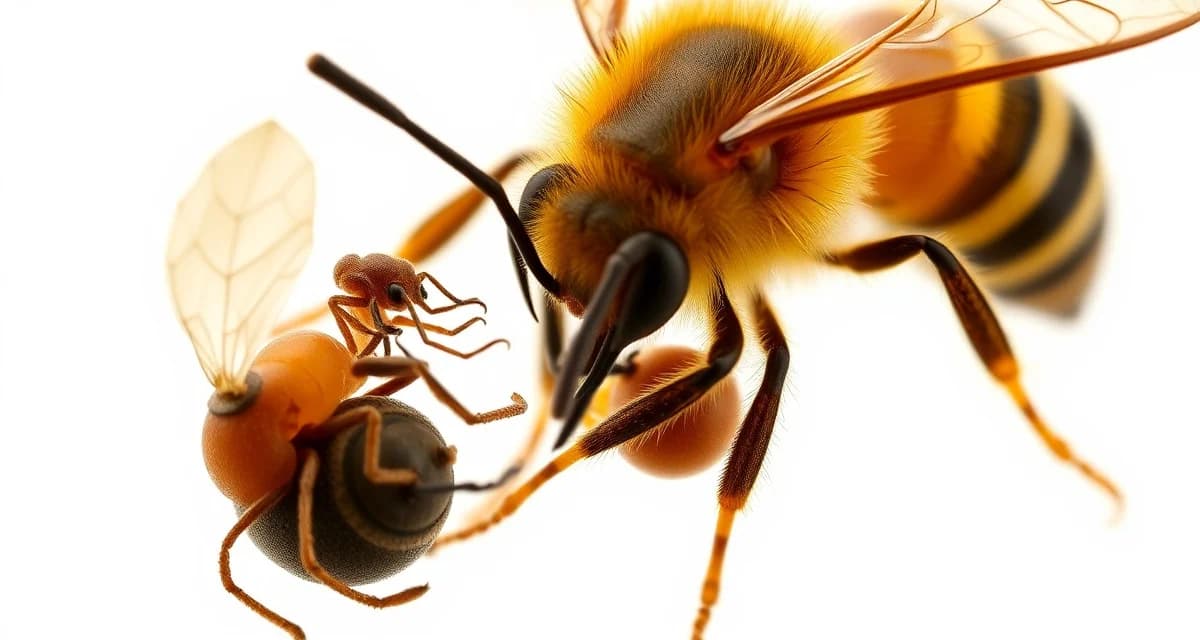
Pseudoscorpions (Chelifer cancroides) have been observed killing varroa mites in hives but cannot be commercially scaled yet. That's the most promising piece of biocontrol research currently available, and the caveat in that sentence is important. The gap between "observed in hives" and "commercially scalable" is where most biological control research gets stuck.
This article covers the current state of varroa biocontrol research, which natural enemies have been identified, what they can and can't do, and why a biological solution to varroa, while scientifically interesting, remains a future prospect rather than a current management tool.
TL;DR
- This guide covers key aspects of do varroa mites have natural enemies? the search for biocont
- Mite monitoring should happen at minimum every 3-4 weeks during active season
- The 2% threshold in spring/summer and 1% in fall are standard action points based on HBHC guidelines
- Always run a pre-treatment and post-treatment mite count to calculate efficacy
- Treatment records including product name, EPA number, dates, and counts are required for state inspection compliance
- VarroaVault stores all monitoring and treatment data with automatic threshold comparison and state export formatting
The Biocontrol Challenge
Varroa destructor is a highly successful parasite that evolved alongside Asian honey bees (Apis cerana) for thousands of years before jumping to European honey bees. In its native host, A. cerana has co-evolutionary defenses that include hygienic behavior, grooming that removes mites, and brood development timing that limits varroa reproductive success. In A. mellifera, these defenses are largely absent or insufficient.
For a biological control agent to work against varroa, it would need to:
- Enter the hive or brood cells where mites reside
- Effectively kill or incapacitate mites without harming bees or honey
- Reproduce or be deployed at sufficient scale to reduce mite populations meaningfully
- Not become a pest problem itself
- Be compatible with honey production and food safety requirements
No currently identified biocontrol agent meets all of these criteria at commercial scale.
Pseudoscorpions
The most promising current biocontrol candidate is Chelifer cancroides, the house pseudoscorpion. These tiny arachnids (2-3mm) have been found inhabiting bee colonies in Europe and North America for decades, often overlooked during inspection. Recent research has documented that pseudoscorpions actively prey on varroa mites within hives.
In laboratory observations, pseudoscorpions successfully capture and kill varroa mites using their pincers. In hive observations, pseudoscorpion presence correlates with slightly lower mite loads in some studies, though the effect size is modest. Pseudoscorpions are not aggressive toward bees and appear to co-exist peacefully with the colony.
The commercial scaling problem: pseudoscorpions reproduce slowly, have specific habitat requirements, and cannot be raised at the density needed to make a meaningful dent in a varroa infestation. You can't buy a packet of pseudoscorpions at your beekeeping supplier. Some beekeepers who find pseudoscorpions in their hives deliberately keep them, but the numbers that naturally establish are too small to substitute for chemical management.
The research interest is real and ongoing. If pseudoscorpion populations could be raised at scale and introduced reliably, they might become part of an integrated approach. For now, they're a curious natural observation, not a management tool.
Fungal Pathogens
Several fungal pathogens have been investigated as potential biological control agents for varroa. The most studied is Metarhizium anisopliae, an entomopathogenic fungus (a fungus that infects and kills arthropods) that has been developed commercially for pest control of beetles and other insects.
Laboratory results with M. anisopliae against varroa were initially promising, showing high mite kill rates. Field results have been less impressive, for several reasons:
- Honey bee colonies are hygroscopic environments that control humidity and temperature in ways that suppress fungal sporulation
- Worker bees have antimicrobial properties that interfere with fungal establishment
- Application methods that deliver effective fungal doses to mites inside capped brood are technically challenging
- Bees may remove or groom off fungal spores before infection occurs
Research into improved formulations and delivery methods continues. Some researchers are working on combining fungi with attractants that encourage mites to contact spore deposits.
Genomic and RNAi Research
RNA interference (RNAi) is an emerging area of research where small RNA molecules are used to silence specific genes in varroa mites. The approach would target genes essential for varroa reproduction or survival without affecting bees. Early research in this area is promising at the laboratory level.
The regulatory pathway and commercial development for RNAi-based varroa treatments would be similar to biopesticides, and the timeline to a commercially available product is likely measured in years to decades rather than months.
The Research Update Promise
VarroaVault's research update section on biocontrol is maintained quarterly with links to published studies from USDA-ARS bee labs and international research groups. The field moves slowly but does move. We'll update this article and the research tracker as significant results emerge.
For practical management while biocontrol research develops, the complete varroa management guide covers all current chemical and mechanical management tools. The [treatment rotation planning](/treatment-rotation-planning) guide covers how to use existing treatments in a way that minimizes resistance pressure while we wait for better options.
Frequently Asked Questions
Are there any natural predators of varroa mites?
Pseudoscorpions (particularly Chelifer cancroides) have been documented killing varroa mites in bee colonies and are the most promising known natural predator. Some entomopathogenic fungi (Metarhizium anisopliae) kill mites in laboratory conditions. In their native Asian honey bee hosts, Apis cerana, varroa's natural enemies include the bees' own hygienic and grooming behaviors, which have co-evolved with the mite. In European honey bees, these defenses are less effective, and no external predator population is large enough to control varroa at scale.
Will biological controls ever replace chemical varroa treatments?
Current scientific consensus is that biological controls are unlikely to fully replace chemical treatments within the next 10-15 years. The scaling challenges, regulatory pathways, and variable field efficacy of current candidates make them more likely to become complementary tools than replacements. Research into genetics-based resistance breeding in bees is potentially more promising in the near term, particularly with VSH (Varroa Sensitive Hygiene) traits that are already commercially available.
Does VarroaVault track research updates on biocontrol?
Yes. VarroaVault maintains a quarterly-updated research section in the educational resources area of the app. When significant biocontrol research is published from USDA-ARS, the University of Minnesota Bee Lab, or international research programs, we update the article and send a notification to users who have subscribed to the research updates feed.
How do I know if my varroa treatment is working?
Run a mite count 2-4 weeks after the treatment ends and compare it to your pre-treatment count. The efficacy formula is: ((pre-count - post-count) / pre-count) x 100. A result above 90% indicates effective treatment. Results below 80% should trigger investigation for possible resistance, application error, or reinfestation. Log both counts in VarroaVault to track efficacy trends across treatment cycles.
How often should I check mite levels in my hives?
At minimum, once per month (every 3-4 weeks) during the active season. Increase to every 2 weeks when counts are near threshold or after a treatment to verify it worked. In fall, monitoring frequency matters most because the window to treat before winter bees are raised is narrow. VarroaVault's monitoring reminders can be set to your preferred interval for each apiary.
What records should I keep for varroa management?
Each record should include: date of count or treatment, hive identifier, monitoring method used, number of bees sampled, mites counted, infestation percentage, treatment product name and EPA registration number, dose applied, treatment start and end dates, and PHI end date. State apiarists typically expect this level of detail during inspections. VarroaVault captures all of these fields in a single log entry.
What is Do Varroa Mites Have Natural Enemies? The Search for Biocontrol?
"Do Varroa Mites Have Natural Enemies? The Search for Biocontrol" is an evidence-based overview of current biological control research targeting Varroa destructor, the parasitic mite responsible for widespread honey bee colony losses. It examines which organisms—including pseudoscorpions, predatory mites, and entomopathogenic fungi—have shown promise in laboratory or field settings, and honestly assesses why none have reached commercial viability yet. The article helps beekeepers understand where the science stands today versus what may become available in the future.
How much does Do Varroa Mites Have Natural Enemies? The Search for Biocontrol cost?
Biocontrol for varroa is not yet a purchasable product, so there is no direct cost to implement it. Current chemical and organic treatments like oxalic acid, formic acid, and thymol-based products remain the practical options, ranging from a few dollars to around $30 per treatment depending on colony count. Pseudoscorpions, the most promising biocontrol candidate observed, cannot be commercially sourced for hive use. Beekeepers should budget for proven monitoring and treatment protocols while biocontrol research continues to develop.
How does Do Varroa Mites Have Natural Enemies? The Search for Biocontrol work?
Biological control works by introducing or encouraging natural predators, pathogens, or competitors that target varroa mites specifically. Pseudoscorpions (Chelifer cancroides), for example, actively hunt and kill mites they encounter inside the hive. Entomopathogenic fungi like Metarhizium anisopliae infect mites on contact. The challenge is getting these organisms to persist, reproduce, and operate at scale within a managed hive environment without disrupting bees. Most candidates work in controlled conditions but fail to maintain effective populations under real-world beekeeping.
What are the benefits of Do Varroa Mites Have Natural Enemies? The Search for Biocontrol?
Successful varroa biocontrol would offer beekeepers a self-sustaining, chemical-free suppression method that reduces resistance risk and treatment labor. Unlike synthetic miticides, biological agents could theoretically establish ongoing population pressure against mites without repeated applications. This matters for organic operations and for reducing residue concerns in honey and wax. Understanding the research landscape also helps beekeepers evaluate future product claims critically, avoiding premature investment in unproven solutions marketed ahead of solid field data.
Who needs Do Varroa Mites Have Natural Enemies? The Search for Biocontrol?
Any beekeeper managing colonies wants effective, sustainable varroa control—so this topic is broadly relevant. It is especially valuable for organic or treatment-free-leaning beekeepers evaluating alternatives to chemical miticides, researchers and extension agents tracking IPM developments, and hobbyists curious about why a "natural" solution has proven so difficult to develop. Commercial beekeepers managing large operations will find it useful for assessing when emerging biocontrol tools might realistically enter their IPM rotation alongside current monitoring and treatment programs.
Related Articles
Sources
- American Beekeeping Federation (ABF)
- USDA ARS Bee Research Laboratory
- Honey Bee Health Coalition
- Penn State Extension Apiculture Program
- Project Apis m.
Get Started with VarroaVault
The information in this guide is most useful when you have your own mite count data to apply it to. VarroaVault stores every count, flags threshold crossings automatically, and builds the treatment history you need for state inspections and effective management decisions. See pricing and free tools at varroavault.com.