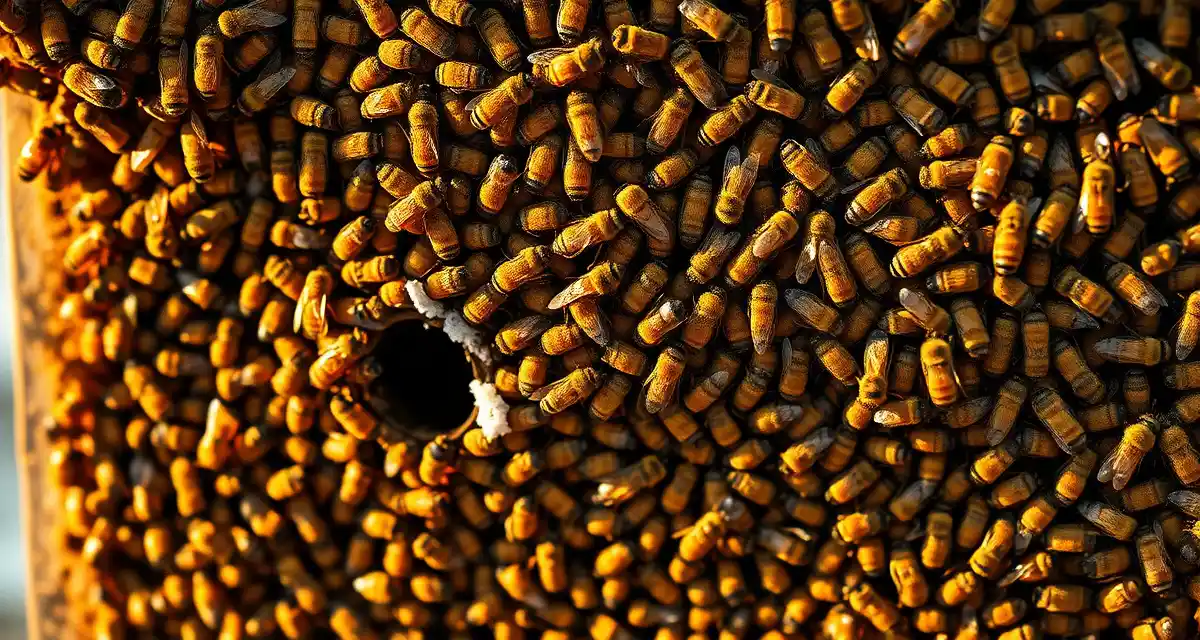
Packing Down for Winter: Final Varroa Steps Before First Frost
Colonies treated with OA dribble during the first confirmed broodless period have winter survival rates 35% higher than untreated controls. That difference is almost entirely determined by what you do in the six weeks before your first frost. Pack-down season is the highest-leverage period in your entire beekeeping year.
Here's what needs to happen for varroa, in order, before winter sets in.
TL;DR
- Winter colony losses caused by varroa are largely preventable with effective fall treatment before winter bees are raised
- Winter bees raised under high mite pressure in August-September have shorter lifespans and cannot sustain the cluster
- The fall treatment window (August-September in most regions) is the most important management action of the year
- oxalic acid dribble during a true broodless period (December-January in northern states) can rescue high-mite colonies
- A 1% mite threshold in fall (vs. 2% in summer) reflects the higher stakes of winter bee quality
- Track fall mite counts and winter survival rates together in VarroaVault to measure the impact of your treatment timing
The Final Count: Is Treatment Still Needed?
If you've been monitoring all season, you already have a recent count. But if your last count was more than 3 weeks ago, you need a fresh count before pack-down. Mite populations can change dramatically in September and October as varroa from collapsing neighboring colonies arrive through robbing.
What threshold to use at pack-down:
The pre-winter threshold is more conservative than the active-season threshold. Most guidance, including HBHC recommendations, uses 2% as the treatment trigger in fall (versus 3% during the brood season). Some beekeepers use 1.5% in late September for colonies going into long northern winters.
Use the tighter threshold. You're not just managing now; you're protecting winter bees for 4-6 months.
What method to use:
alcohol wash. This is a threshold decision, so accuracy matters. sugar roll underestimates counts by 30-40%. Do the alcohol wash even if it feels inconvenient.
Timing Your Pack-Down Treatment
The goal is to treat after the colony has gone broodless and before temperatures drop so low that treatment becomes impractical or ineffective.
In most US climates, this window is roughly October to early November. The exact timing varies by location:
Northern states (USDA zones 3-5): Broodless period typically starts mid-October to early November. Target the first confirmed broodless week.
Mid-Atlantic and Midwest (zones 5-6): Broodless period mid-October to November. Watch the forecasts; there can be a warm snap that restarts brood.
Southeast and Pacific Coast (zones 7-9): Broodless period may be brief or unreliable. Some colonies in these regions never fully stop brood rearing. You may need to use OA vaporization extended protocol instead of dribble if the colony won't reliably go broodless.
Florida and other warm-climate states (zones 9-11): No reliable broodless period. OA dribble is not your primary treatment option. Use OA vaporization extended protocol or formic acid for fall treatment.
The OA Dribble Protocol for Winter Pack-Down
When the colony is confirmed broodless:
- Verify broodless status by direct inspection. Look for no capped worker brood. Some capped drone cells can still be present. If you see capped worker cells, wait one more week and check again.
- Prepare your dribble solution per label instructions. Api-Bioxal mixed at 3.2% weight-by-weight in 1:1 sugar syrup (note: the label specifies exact preparation; follow it precisely).
- Count the seams of bees. Apply 5ml of solution per seam of bees, up to a maximum of 50ml total per colony. Don't exceed 50ml.
- Apply by dribbling along the seam between frames where bees are clustered. Do this on both sides of the cluster if the bees are tight. Work methodically frame by frame.
- Close the hive and leave it. One application. You're done with mite treatment for the winter.
- Log the treatment in VarroaVault immediately, including the confirmation of broodless status. This creates your winter treatment record.
The Rest of the Pack-Down Checklist
Mite treatment is the most critical step, but it's part of a larger pack-down process. After your OA dribble:
Reduce the entrance. Use a reducer or entrance screen to prevent mouse entry and reduce heat loss through winter. A ventilated bottom board is appropriate in most climates; solid boards are appropriate in cold wet climates prone to condensation.
Assess food stores. A colony needs 60-90 lbs of honey to survive a northern winter (less in milder climates). Heft the hive from the back: a heavy back indicates adequate stores. If stores are light, feed 2:1 sugar syrup now before temperatures drop below 50°F.
Check queen presence. You should have confirmed queen presence in the September inspection. If you didn't, check now. A queenless colony going into winter won't survive.
Wrap or insulate if necessary. In zones 3-5, insulation or wrapping reduces winter cluster energy expenditure. This is optional in zones 6 and above but appropriate in very cold climates.
Record everything in VarroaVault. Your pack-down data creates the baseline for spring assessment.
Using VarroaVault for Winter Pack-Down
VarroaVault's winter pack-down mode generates a per-hive checklist that covers all steps including final mite count, broodless confirmation, OA dribble application, food stores assessment, and entrance reduction. Work through each hive and mark each step complete on the checklist.
The pack-down records connect directly to your spring assessment workflow. When you open hives in March, VarroaVault shows you each hive's pre-winter mite count and treatment status alongside your spring count entry.
Frequently Asked Questions
When should I do my final varroa treatment before winter?
Treat during the first confirmed broodless period, typically October to early November in most US climates. The exact timing depends on your zone. The key is confirming broodless status by inspection before applying OA dribble, since dribble efficacy drops to 40-50% when brood is present. In warm climates without a reliable broodless period, switch to OA vaporization extended protocol instead of dribble.
Can I still treat in November if I missed October?
In many regions, November is still viable. If your colony is broodless and temperatures are above 40°F during application, a November OA dribble can still achieve good efficacy. Below 40°F, bees cluster tightly and distributing the dribble solution through the cluster becomes difficult. Vaporization can be used at lower temperatures than dribble, but you're racing against diminishing returns. Treat as soon as possible if you're behind schedule.
How does VarroaVault guide me through winter pack-down?
VarroaVault's winter pack-down mode generates a per-hive checklist covering your final mite count, broodless confirmation, OA dribble application, and general hive preparation steps. Work through the checklist hive by hive and mark each step complete. The pack-down records link directly to your spring assessment so you can compare pre-winter conditions with spring survival outcomes.
Can I treat for varroa during winter?
In northern regions where colonies form a tight winter cluster with no brood (typically December-February), oxalic acid dribble is an effective and label-approved treatment. It achieves very high efficacy during true broodless periods because all mites are phoretic. The temperature should be above 40 degrees F during dribble application for bee welfare. Vaporization is also possible but requires safe outdoor conditions for the applicator.
How do I know if my colony survived winter in good mite condition?
Do an early spring mite count (February-March in most regions) as soon as the colony is active and temperatures allow. A count below 1% suggests winter treatment was effective and the colony has a good start. A count above 2% in early spring indicates mites survived in high numbers and a spring treatment should be started promptly before brood population expands.
What is Packing Down for Winter: Final Varroa Steps Before First Frost?
Packing Down for Winter: Final Varroa Steps Before First Frost is a beekeeping management guide covering the critical six-week window before your first frost. It outlines the essential varroa mite control actions needed to protect your colonies through winter, including fall mite monitoring, treatment timing, and oxalic acid dribble application during broodless periods. Following these steps can increase winter survival rates by up to 35% compared to untreated colonies.
How much does Packing Down for Winter: Final Varroa Steps Before First Frost cost?
This is free educational content published on VarroaVault. There is no cost to read the article or follow the management steps it describes. The only costs involved are those associated with purchasing varroa treatments such as oxalic acid or other approved miticides, and any monitoring supplies like alcohol wash kits or sticky boards you may need for fall mite counts.
How does Packing Down for Winter: Final Varroa Steps Before First Frost work?
The process works by targeting varroa mites before winter bees are raised in August and September. You perform a mite wash to assess infestation levels, apply treatment if counts exceed 1%, and confirm a broodless period before using oxalic acid dribble. Treating during the broodless window maximizes efficacy because mites have no capped brood to hide in, reducing the mite load carried into winter.
What are the benefits of Packing Down for Winter: Final Varroa Steps Before First Frost?
The primary benefit is significantly higher winter survival rates. Colonies treated during the fall window produce healthy winter bees with normal lifespans, enabling the cluster to survive until spring. Untreated or poorly timed treatment results in winter bees raised under high mite pressure that die prematurely, collapsing the cluster mid-winter. Fall varroa management is considered the single highest-leverage action in the entire beekeeping year.
Who needs Packing Down for Winter: Final Varroa Steps Before First Frost?
Any beekeeper overwintering colonies in regions with cold winters needs to follow these steps. It is especially critical for hobbyists and small-scale beekeepers who may only check hives occasionally, as late or missed fall treatment is the leading preventable cause of winter losses. Beekeepers in northern states where a true December-January broodless period occurs have an additional oxalic acid dribble opportunity to rescue high-mite colonies.
How long does Packing Down for Winter: Final Varroa Steps Before First Frost take?
The active management window spans approximately six weeks before your first expected frost, typically August through September in most northern regions. A single mite count takes 20-30 minutes per hive. Treatment application varies by product but oxalic acid dribble during the broodless period takes only minutes per colony. Tracking counts and outcomes in VarroaVault throughout the season adds minimal time and helps you measure the impact of your timing year over year.
Related Articles
Sources
- American Beekeeping Federation (ABF)
- USDA ARS Bee Research Laboratory
- Honey Bee Health Coalition
- Penn State Extension Apiculture Program
- Project Apis m.
Get Started with VarroaVault
Winter losses are largely a fall varroa management problem. VarroaVault helps you track fall treatment timing, verify efficacy with post-treatment counts, and build the record that shows you whether your winter preparation is actually working year over year. See pricing and free tools at varroavault.com.